
Namibia’s woodlands were once far more extensive. Today, a growing population and the commercial harvesting of timber species like Zambezi Teak and Kiaat put increasing pressure on this vital resource.
Community forests are proving that conservation and local enterprise can work together.
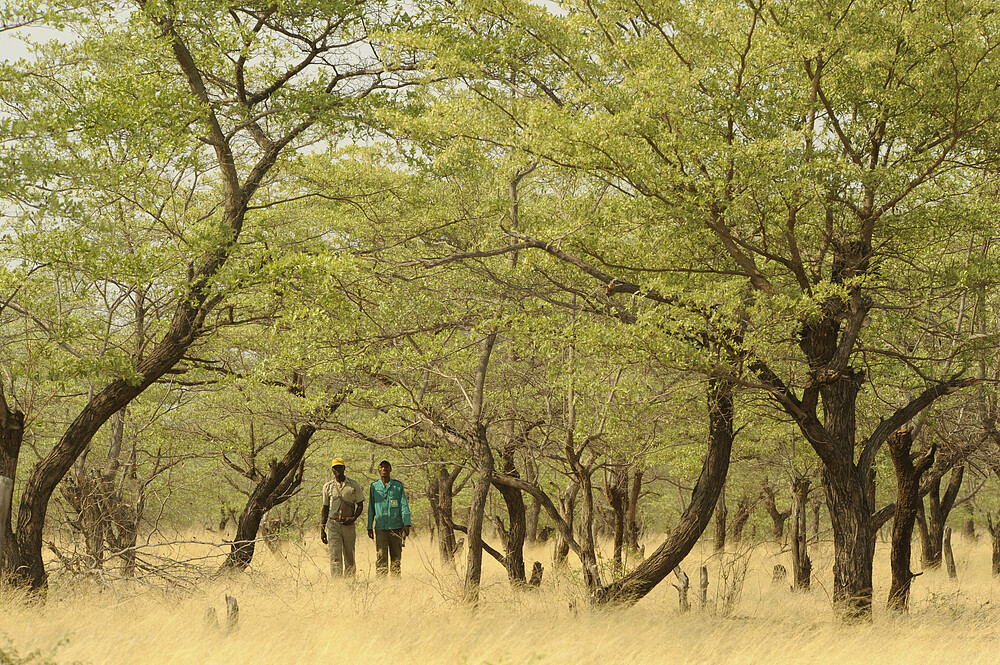
Namibia’s forests are part of Southern Africa’s Miombo woodlands. They are not dense rainforests, but mosaics of trees and bush that are ecologically rich. They store carbon, prevent soil erosion, and support diverse wildlife.
Community forests differ from other conservation models in one fundamental way: every resident is a member. Unlike conservancies, where not all residents hold membership rights, everyone living within a community forest has a stake in its management and benefits.
There are currently 43 registered and emerging community forests across ten regions in northern Namibia, including Zambezi, Kavango, and Kunene. Together, they cover around 8% of the country.
These forests are an integral part of Namibia’s CBNRM programme. Many overlap entirely with communal conservancies, empowering local people to take responsibility for the land they live on.
A principal source of income for community forests is the commercial harvesting of Namibian hardwoods like African Teak.
Crucially, harvesting is not open-ended. The Directorate of Forestry works with communities to calculate an ‘annual allowable offtake’ —a binding quota reviewed every 5 to 10 years.
Community members conduct the timber inventories themselves. They know their areas intimately. Technical guidance is provided by the National Forestry Inventory, ensuring data is robust and management plans are sound.
Forests also provide nutritional and economic resources beyond wood.
Local forest committees manage these resources. They issue permits for harvesting and grazing, always guided by annual monitoring and the principle of sustainability.
Community forests do more than protect trees. They restore the value of natural resources to the people who live among them. By blending traditional knowledge with scientific inventory, Namibia is building a forest management model that is both conservation-driven and community-led.